
When you step into a gym, you often see people strapping on the heavy belts before heading into the squat rack or deadlift platform. Have you ever wondered what those belts do? Do they actually work? Does that situation leave you confused about whether you should put a belt on? We understand that as a beginner, it’s very common to feel uncertain about weightlifting belts.
A weightlifting belt is more than a flashy tool in the gym. But it’s also not the magic ticket to your weightlifting journey. Like any other accessory in the gym, it has its place, its purpose, and its limits.
What is a weightlifting belt? How does it work?
A weightlifting belt is a thick leather belt designed to wrap tightly around your waist. It helps you with stability and balance while you lift heavy weights. So when you lift something heavy, your core automatically tightens to support your spine. A belt simply gives your core a solid push against it, increasing intra-abdominal pressure. That pressure helps your spine lock in a safer position when you lift heavy. With more pressure, you gain more stability, and more stability ultimately leads to safer lifts. This is why weightlifters typically use weightlifting belts during heavy compound movements like squats, deadlifts, and overhead presses.
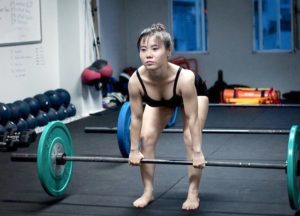
The benefits of using a weightlifting belt.
- It protects your back under heavy loads. A belt reduces stress on your spine, giving you a useful layer of safety.
- It helps you maintain a better form, especially when you are fatigued; the form can start to slip. Meanwhile, a belt helps you maintain the grip. And remind your core to keep the posture tight.
- It will help you brace harder and feel secure under heavy bars.
- It doesn’t just give you a physical boost but also a mental boost. You feel confident when you have a tight belt wrapped around your waist.
The downside you should know about.
- Over-resilience can weaken your core strength. If you use a belt every single day, your back and abs get dependent on it, and over time, you could actually limit your progress.
- A belt won’t correct your poor form; in fact, you are more likely to carry the incorrect posture with a belt on, as it supports your back, and you don’t really realize your incorrect posture.
- Extra pressure can lead to high blood pressure. It is a concern for someone with medical issues. Although it doesn’t affect lifters that much.
When Should You Actually Use a Belt?
You don’t need weightlifting belts too often; using them for every rep can slow your progress. So, use the weightlifting belt under these circumstances:
- Your spine is under high stress: any lifts that put your back at risk, like barbell rows, squats with heavy weights, or deadlifts. Need external support; however, you should not become dependent on belts.
- You’re lifting near-max weights: heavy weight exercises are the prime time to use a belt. They add stability to your workout and push you harder.
- If you want a mental edge, using a weightlifting belt gives you a psychological edge, giving you a mental push. A simple act of buckling up the belt can make you feel more prepared and motivated.
It is completely unnecessary to use a belt for every lift in the gym. Save it for heavy tasks and heavy weights.
How to use a belt correctly
Using a weightlifting belt isn’t just about strapping it on for the best. Wearing it the correct way can maximise its benefits and safety.
- Placement is the key:The belt should sit just above your hip bones and around your lower back. Tight enough to give your back the support it needs, but not so tight that you can’t get a proper breath.
- Brace, don’t just breathe: the belt’s effectiveness comes from the brace against it. Expand your core 360 degrees against the belt, and take a deep breath into your abdomen rather than your chest. Consider pressing your lower back, obliques, and abs outward against the leather. The intra-abdominal pressure that we previously discussed is caused by this action.
- Practice makes perfect: as a beginner, start with lighter weights and practise the bracing technique.
Do beginners really need a belt?
If you are new to learning the foundation and forms of muscle training. You don’t need to depend on any equipment. If you are starting a particular goal, like a wrestling competition or a weightlifting competition, you should consider hiring a personal fitness trainer. With the support of a trainer, you can develop a programme that strengthens your core without taking any shortcuts, learn safe lifting techniques, and know when to use a belt. After you’ve built that foundation and are safely lifting heavy weights, a belt can be a helpful addition to your gym bag.
Conclusion
Weightlifting belts are a valuable tool indeed, but they’re not a shortcut for your heavy lifting. They can work best when you already have solid form and need extra support for heavy lifts. But for beginners, the priority should always be building raw core strength and learning proper techniques.
Frequently Asked Questions (FAQ)
Ques 1. Can a belt help prevent back injuries?
Ans: Yes, a belt can help reduce the risk of injury when used in the right form. A belt provides a solid surface for your core to brace against. This increases intra-abdominal pressure and supports your spine. However, it cannot improve poor lifting techniques. This is why it is advised to improve your posture and techniques first, then use a weightlifting belt.
Ques 2. Can I use a weightlifting belt for every exercise?
Ans: It’s not recommended to use a weightlifting belt for every exercise. A weightlifting belt is designed for heavy, compound lifts like squats, deadlifts, and overhead presses, when your spine is under heavy stress. Using it for every exercise can affect its effectiveness.
Ques 3. Will using a belt weaken my core?
Ans: Yes, if you rely on the belt. It can weaken your core. Instead of relying on the belt, you can strategically use it. Use it during the initial lifts, then take a break and try lifting the same weight again without a belt. This time, you can strategically reduce the reps.